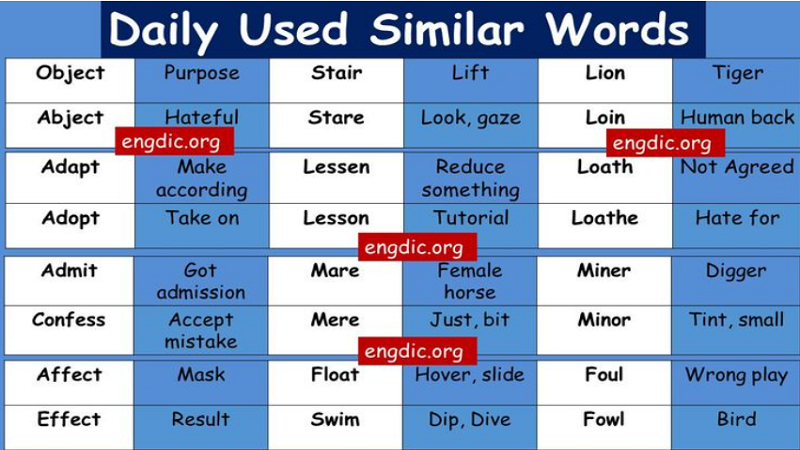
In English, many words have meanings that are close to each other. These are called similar words. Learning similar words helps you speak better, write better, and understand English more clearly. This guide will help you learn similar words most easily with clear examples.
What Are Similar Words?
Similar words are words that have almost the same meaning. They may not be 100% exact, but they are close enough to use in place of one another. These words make your sentences stronger and help you avoid repeating the same word again and again.
Example:
Happy → glad, joyful, pleased
All these words give the same feeling of happiness.
Why Do We Need Similar Words?
Similar words are very helpful in everyday English. They make your language:
-
Stronger
-
More interesting
-
Easier to understand
You can express yourself better when you know more words with close meanings.
Example:
Instead of saying “big” many times, you can say:
-
Large
-
Huge
-
Massive
This makes your writing and speaking more natural.
Everyday Similar Words (With Easy Examples)
1. Happy
-
Joyful
-
Glad
-
Pleased
Sentence: She was glad to see her friend.
2. Big
-
Large
-
Huge
-
Giant
Sentence: They saw a giant tree in the forest.
3. Fast
-
Quick
-
Rapid
-
Speedy
Sentence: The rabbit is fast and quick.
4. Small
-
Tiny
-
Little
-
Mini
Sentence: The baby held a tiny toy.
5. Smart
-
Intelligent
-
Bright
-
Clever
Sentence: He is very clever in math.
6. Easy
-
Simple
-
Clear
-
Effortless
Sentence: The work was simple to do.
7. Cold
-
Chilly
-
Cool
-
Freezing
Sentence: The water felt freezing.
8. Beautiful
-
Pretty
-
Lovely
-
Gorgeous
Sentence: The garden looked lovely today.
These examples help students use better words in school and everyday life.
How to Use Similar Words Correctly
Using similar words is easy, but you must choose the right one for the right sentence.
✔ Choose a word that fits the tone
“Giant” is stronger than “large.”
“Freezing” is stronger than “cold.”
✔ Do not force similar words
Use them naturally so the sentence sounds simple and clear.
✔ Practice reading
Reading helps you understand which similar word fits best.
Similar Words in School Writing
Students can improve writing by using similar words in essays, homework, and stories.
Before:
The movie was good. The actors were good too.
After:
The movie was great. The actors were amazing too.
Simple changes make your writing better and more interesting.
Common Mistakes to Avoid
Here are some mistakes students make:
❌ Using the wrong word
Not all similar words fit every sentence.
❌ Using too many big words
Keep your sentences simple and natural.
❌ Mixing similar and opposite words
Cold ≠ Cool → similar
Cold ≠ Hot → opposite
Quick Practice Section
Match the word with its similar meaning:
-
Happy → joyful
-
Big → large
-
Fast → quick
-
Small → tiny
-
Pretty → lovely
You can create more examples to practice daily.
Final Summary
Similar words help speak, write, and understand English. They make your language strong and more interesting. With regular practice, you can use these words correctly in school and daily life. The more similar words you learn, the better your English will become. More Information